Horses in imperial ceremony
The Imperial Household Agency describes two distinct areas of equestrian culture.
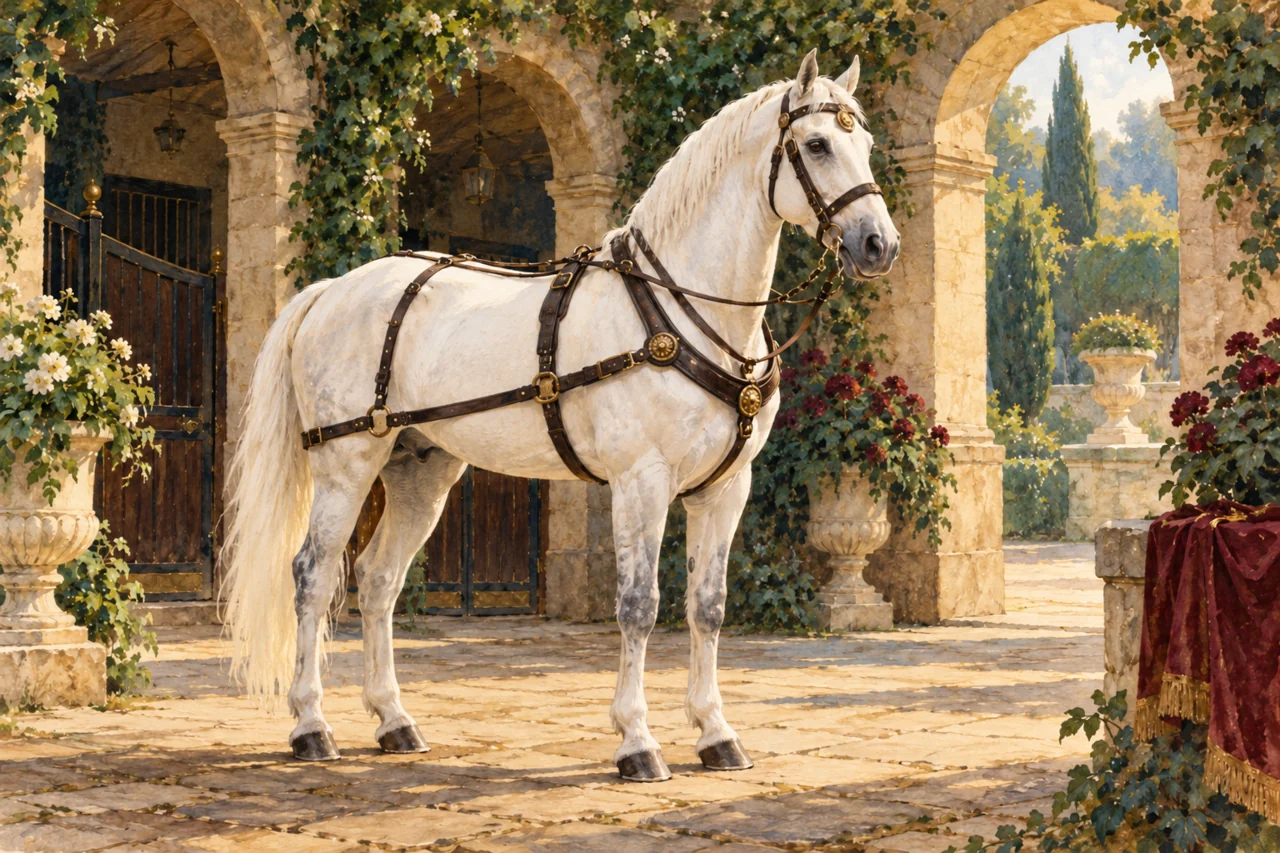
AI illustration · details
RoyalBea · AIAn imagined scene, not a specific royal horse, palace or reconstruction of a ceremony.
The Imperial Household Agency describes two distinct areas of equestrian culture. One concerns preserved arts such as dakyū and horohiki. Its account links the form of dakyū practised at the Agency's stables with the Edo period; this does not establish unchanged practice since antiquity.
The other area is diplomacy. Newly appointed ambassadors may travel by ceremonial carriage from Tokyo Station to the palace's South Porch. The Agency describes vehicles drawn by two horses and explains that limousines may replace them in stormy weather. An equestrian game, a display of skill and an ambassador's journey serve different functions. A photograph needs the correct event before receiving the vague label 'imperial ritual'.
Editorial notes2026-10-30
Equestrian arts and diplomatic transport are separate; a particular procession requires its current notice.
Reviewed with AI assistance. The stated claims and choice of sources were examined; this is not independent academic peer review or a guarantee that no errors remain.
Materials used in the reviewSources and further research
- Horses in imperial ceremony · institutional source
Traditional horsemanship and an ambassador’s carriage are distinct strands of court culture.
- Imperial Household Agency · credentials ceremony
An institutional account of the ceremony, including the carriage journey. A ceremonial event does not necessarily allow public access.
Prepare a lesson · 45 minResearch / Patronage
A teacher script, reading material, photocopiable worksheets and an assessment rubric — based on this entry.
One packet uses one PDF download. The teacher checks suitability for the class.About this entry and rights
Descriptive content was prepared with AI assistance. The entry states its review scope. RoyalBea is an independent editorial project. Catalogue descriptions do not imply a full reading of the books. Check the date, scope and rights attached to source materials.